Co-Borrower, Co-Signer, or Guarantor? Understanding Canadian Mortgage Roles
July 20 2026
When you apply for a mortgage in Canada, your lender looks closely at your income, debt load, and credit history. If your numbers fall a bit short of their guidelines—or if you need help passing the mortgage stress test—the lender may ask you to bring a third party onto your application.
Depending on how much help you need and how the file is structured, that person will join as a Co-Borrower, Co-Signer, or Guarantor.
While all three give the lender added security, they work very differently when it comes to home ownership (Land Title), payment liability, and future borrowing power. Here is how they break down in Canadian real estate.
Quick Comparison at a Glance
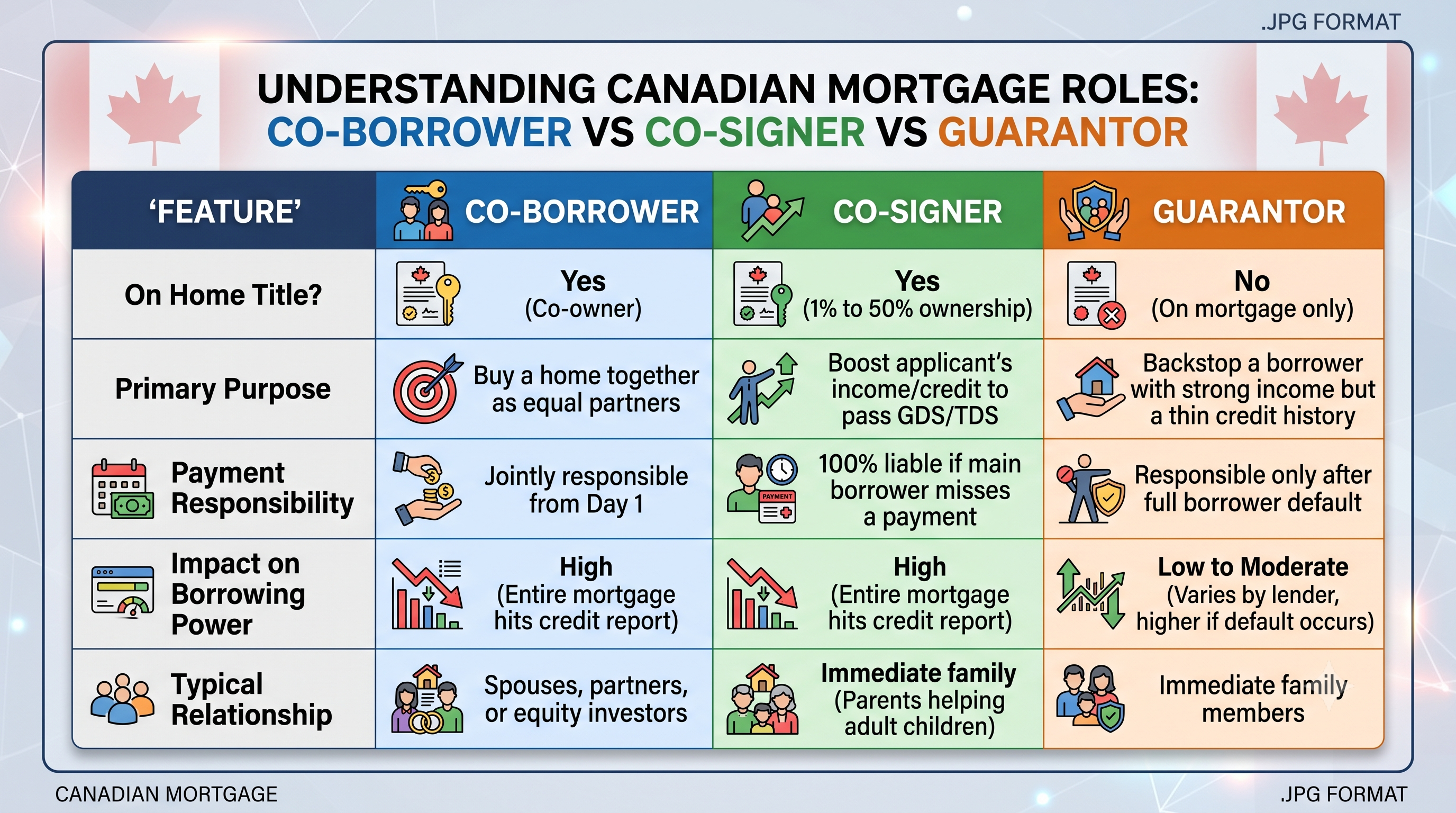
1. The Co-Borrower
A Co-Borrower is a true joint purchaser. This is the most common arrangement when spouses, common-law partners, or family members purchase a home together.
Property Title: They are listed on both the mortgage documents and the property’s legal title (typically registered as Joint Tenants or Tenants-in-Common).
Application Impact: The lender combines both applicants' incomes and debts to calculate Gross Debt Service (GDS) and Total Debt Service (TDS) ratios.
Liability: Both parties share equal, 100% legal responsibility for the mortgage payments from day one.
2. The Co-Signer
A Co-Signer is added when the primary borrower cannot qualify for the mortgage on their own—usually due to insufficient income, a short work history, or credit that needs a boost.
Property Title: In Canada, a co-signer must be on the property title. Even if they hold as little as a 1% beneficial interest, Canadian lending guidelines generally require anyone listed on the mortgage debt as a primary/co-applicant to also hold legal title.
Liability: The co-signer is 100% responsible for the debt. If the primary borrower misses a payment, the lender will immediately pursue the co-signer for the funds.
Credit Impact: Because the mortgage appears on the co-signer’s credit bureau report, the full monthly payment will count against their own debt ratios if they try to buy a home or refinance credit in the future.
Important Canadian Insurer Rule: Mortgage default insurers (CMHC, Sagen, and Canada Guaranty) have specific policies regarding co-signers. For default-insured mortgages (less than 20% down payment), co-signers typically need to be immediate family members.
3. The Guarantor
A Guarantor guarantees that the debt will be paid, but they do not take any ownership in the property. Lenders use guarantors far less frequently than co-signers. They are typically requested when a borrower has more than enough income to carry the mortgage, but has a thin credit history or minor credit blemishes.
Property Title: A guarantor’s name is on the mortgage agreement, but never on the property title. They hold zero equity or property rights.
Liability: A guarantor serves as a backup plan. The lender will only demand payment from a guarantor after exhausting primary attempts to collect from the borrower following a default.
Credit Impact: Since they are not on title, some Canadian lenders do not report the active mortgage on the guarantor’s credit file unless a default occurs (though practices vary between Big Five banks and monoline lenders).
Which Option Fits Your Situation?
Buying a home with your partner? You will be Co-Borrowers so both incomes can be added to the GDS/TDS ratios.
Parents helping a child buy their first home in Canada? Parents usually act as Co-Signers (and go on title as non-occupying co-owners) to help in the situation of the child having limited credit history, job instability, or some other negative situation.
Strong income, but short Canadian credit history? A family member stepping in as a Guarantor can provide the extra security the bank needs without taking ownership of your home.


